Welcome to Kitsuly: A New WordPress Ecommerce Experience

There is a big difference between having an online shop and having a commerce system that is comfortable to run every day. Welcome to Kitsuly: A New WordPress Ecommerce Experience matters because the best setup is not just attractive on launch day; it should still make sense when products, campaigns and customers begin to multiply.
Why this matters in a real store
For day-to-day store work, kitsuly is designed as one connected WordPress commerce workspace rather than a pile of unrelated extensions. The value is not the setting by itself, but the way it connects with the rest of the commerce workflow.
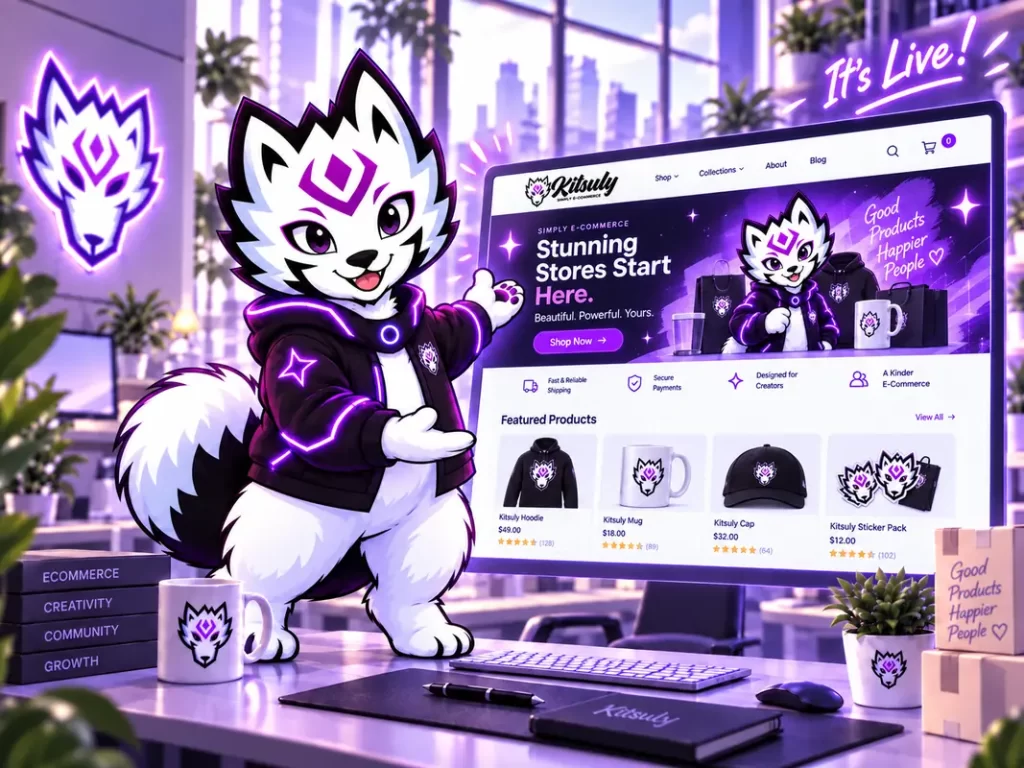
From the merchant side, the store, visual design tools, catalogue, customers, payments, shipping, marketing and reporting are intended to work from the same underlying commerce data. Done well, this reduces friction for the merchant and creates a more consistent experience for the customer.
How Kitsuly approaches it
From the customer-experience side, the practical benefit is a shorter path between changing something in the store and seeing that change reflected across the customer experience. It also makes later changes easier because the store does not have to be reconstructed every time the business evolves.
A useful way to think about it is this: the best way to approach Kitsuly is to start with the store structure, then products and checkout, and only then layer in marketing, automation and advanced integrations. That keeps the workflow understandable as the store becomes more detailed.
For merchants, the advantage of this approach is clarity. You can make a change with a better understanding of what it affects elsewhere in the store. That is the broader Kitsuly goal: fewer disconnected workflows, more useful control and a WordPress ecommerce experience that can grow without becoming harder to understand.
Turning the idea into a working store
The useful way to think about Welcome to Kitsuly: A New WordPress Ecommerce Experience is as part of the whole store rather than a stand-alone feature. A merchant moves between design, products, customers, fulfilment and marketing throughout the same day. When those areas understand the same underlying store, a change made in one place is easier to carry into the rest of the workflow. That is the direction Kitsuly takes: the individual screen matters, but the connection between screens is what makes the platform easier to live with over time.
A practical implementation starts with the smallest version of the workflow that can be tested properly. Set up the relevant content, run through it as an administrator, then repeat the journey as a customer where that makes sense. The goal is not to switch on every option immediately. It is to confirm that the path is clear, the information is accurate and the live result matches what the merchant intended to build.
What to pay attention to as the store grows
As a store grows, small inconsistencies become expensive. A confusing label with ten products can become a recurring support question with a thousand visitors. A manual step that took two minutes with a handful of orders can become a daily bottleneck. Reviewing Welcome to Kitsuly: A New WordPress Ecommerce Experience early gives the merchant a chance to remove those rough edges before they become habits, workarounds or another plugin layered on top of the original problem.
It is also worth reviewing the experience on more than one device and through more than one customer journey. Customers arrive from search, social posts, email campaigns, product links and saved bookmarks. A good Kitsuly setup should make sense regardless of where that customer enters and should keep the next action obvious without forcing them to understand the store’s internal structure.
Why the connected workflow matters
The final check is whether the feature still makes sense when it connects to everything around it. Products feed marketing, orders feed reporting, customer activity influences support, and storefront design affects how all of that information is understood. Kitsuly is most useful when the merchant can treat those areas as parts of one commerce system instead of separate projects that need to be manually stitched together.
That connected approach also makes future changes less intimidating. A store is never really finished: products change, campaigns come and go, branding evolves and new channels become important. Building Welcome to Kitsuly: A New WordPress Ecommerce Experience with a clear structure gives the merchant room to adjust without feeling as though every improvement risks breaking three unrelated tools.